
Battery storage that adds resilience, not confusion.
The right battery plan should feel practical on day one and valuable for years. We help you understand backup, rate protection, and future flexibility in plain homeowner terms.
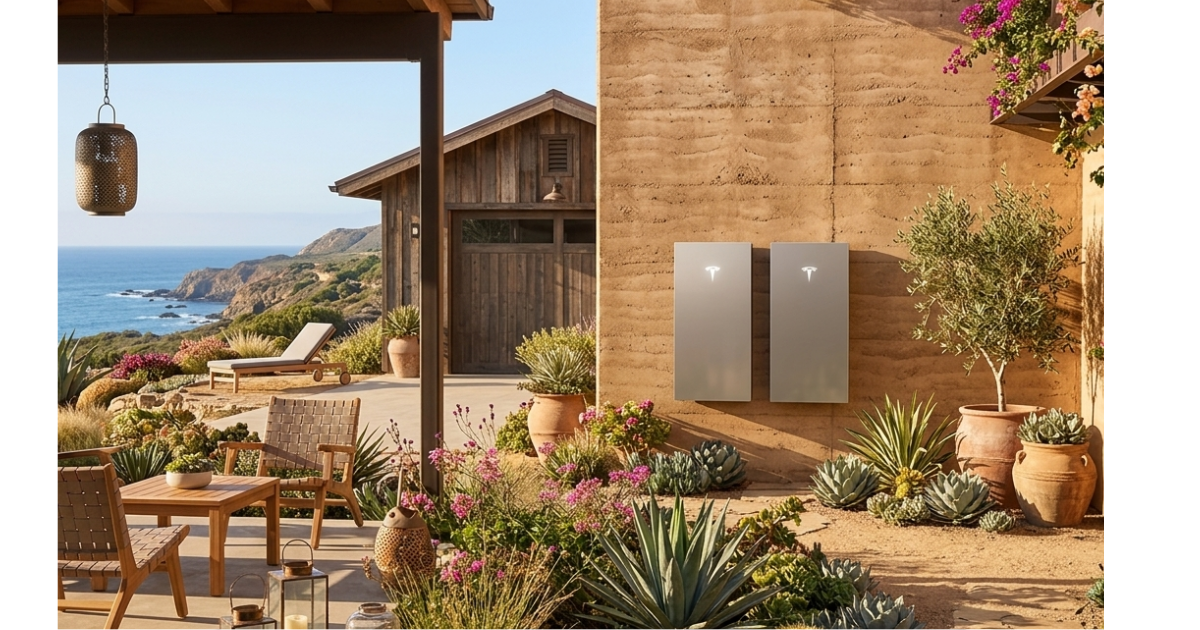
Backup clarity
Know what stays on, what does not, and what backup really means for your home.
Rate-plan strategy
Use stored energy more intelligently when time-of-use pricing starts to bite.
Future-ready design
Build around today’s priorities without cornering the home out of tomorrow’s options.
Why Storage Matters Now
Resilience has gone from “nice to have” to a serious planning category.
Battery storage is no longer just a premium add-on for early adopters. For many California homeowners, it has become one of the clearest ways to improve outage resilience, use more of their own production, and reduce exposure to expensive peak-rate windows.
The real question is not whether batteries sound good in theory. The real question is whether they make sense for your home, your rate plan, and the way you actually want power to behave when the grid becomes less reliable.
Usually the first questions are
What Good Battery Planning Covers
A strong battery recommendation should connect backup, savings, and household priorities.
Outage protection that matches real life
Essential-load strategy should be grounded in what the household actually needs available when the grid goes down.
Smarter use of stored solar production
Storage works best when it is planned as part of the broader energy strategy, not bolted on as an afterthought.
Peak-rate management that actually pencils out
Time-of-use strategy matters when the homeowner wants more control over when expensive power is avoided.
Expansion logic for the next phase of the home
EV charging, future appliances, and added storage capacity should not feel disconnected from today’s design.
Our Approach
Premium guidance means making storage feel understandable before it ever feels technical.
We explain battery storage in plain homeowner language: what will stay on, what will not, how the system interacts with solar production, and whether your priorities point toward storage now or later.
The result should not feel like a battery sales pitch. It should feel like a clear recommendation built around resilience, usability, and the way your home actually consumes power.
Get a design-first proposal built around your roof, utility usage, and home goals.
Talk with a real local specialist, compare financing paths, and understand what makes sense for your home before you sign anything.
What you can expect